

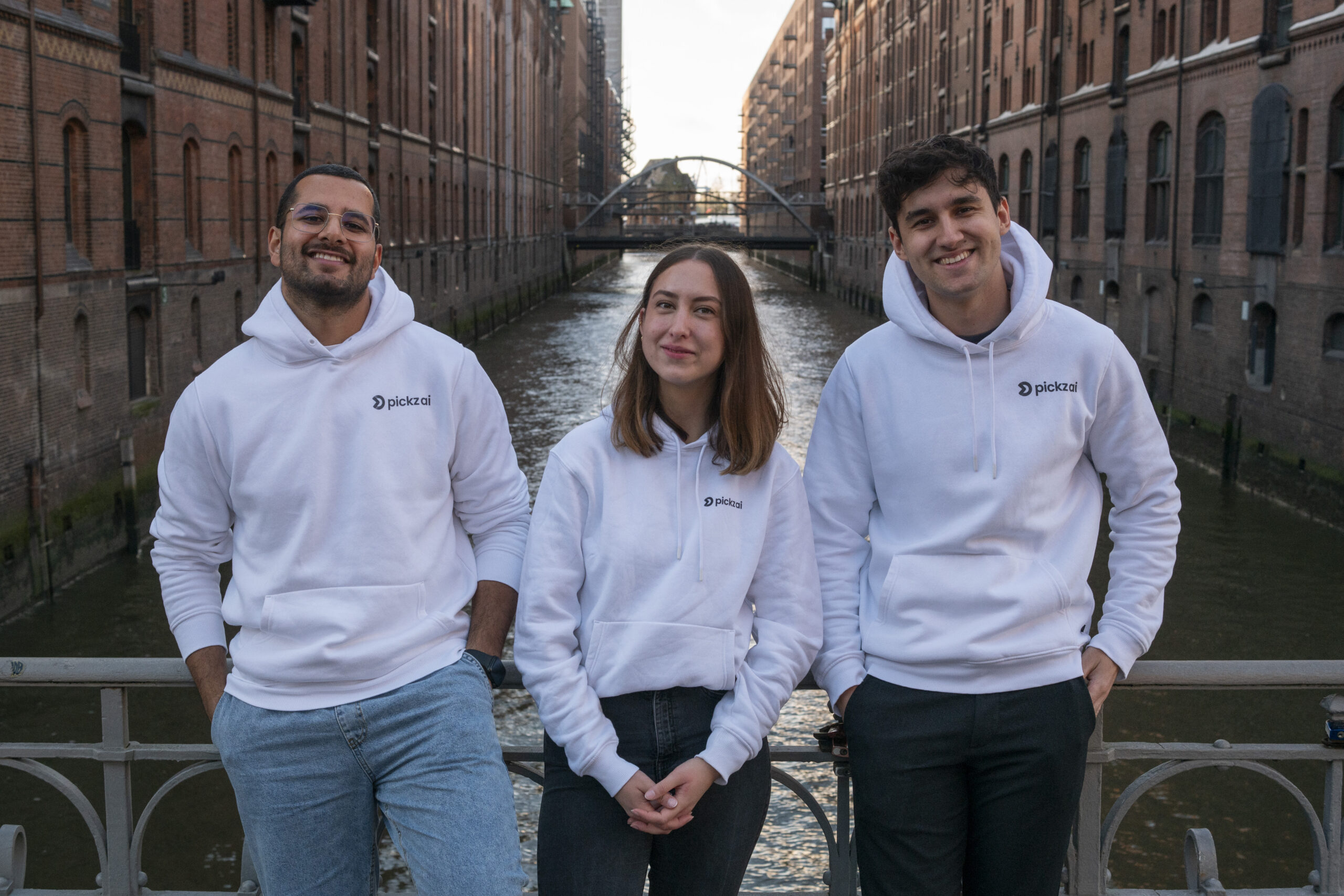
Startup Profile
pickz ai

Introduce yourselves
Explain in three sentences what pickz ai is! How long has pickz ai been around?
pickz ai is a Hamburg-based startup developing AI solutions specifically for the eyewear industry. With our products, we work on two parts of the value chain: helping consumers find the right frames more easily and helping eyewear companies make the development of new collections faster and more structured. We started working on pickz ai as a team in 2025 and founded pickz ai GmbH at the beginning of 2026.
How did the idea come about and what challenges did you have to overcome?
The initial idea came from a very simple observation: choosing glasses is surprisingly difficult. There are thousands of frames, but customers often have very little guidance on what might actually suit them, while opticians have a lot of expertise that is difficult to transfer into a digital experience.
Once we started speaking to people across the eyewear industry, we realized that the same problem exists on the product-development side as well: a lot of valuable knowledge is still hidden in spreadsheets, PDFs, drawings, emails and individual people’s experience.
One of our biggest challenges has therefore been to translate very industry-specific knowledge into technology. Eyewear looks like a relatively simple product from the outside, but small differences in proportions, materials, construction and fit matter enormously. Building AI that understands this context requires a lot of data, feedback and close collaboration with people from the industry.
How does pickz ai work and how does AI support this project?
We use AI where large amounts of information need to be understood, structured or translated into useful recommendations.
For the consumer side, our Brillenkompass helps customers discover suitable frames based on their preferences and characteristics and allows them to virtually try on different models. The idea is not to replace the optician, but to give customers a better starting point for the consultation.
With FrameStudio, our solution for eyewear brands, designers and manufacturers, AI helps interpret sketches, images, PDFs and product information and turn them into structured product data. Instead of manually transferring information between different documents and systems, teams can review, complete and approve that information in one workflow and later hand it over to CAD, PLM or production systems.
Our principle is always: AI structures and recommends – humans decide.
How do you see the role of opticians in an industry where the process of buying glasses increasingly begins online?
I actually think the role of the optician becomes more important, not less.
Customers are used to starting almost every purchasing process online today. They want to explore products, compare options and understand what might suit them before entering a store. But glasses are still a very personal and technically complex product: fit, lenses, measurements, comfort and professional advice are difficult to fully replace digitally.
The opportunity for opticians is therefore to connect these two worlds. Digital tools can inspire and prepare the customer before the visit, while the optician provides expertise, trust and the final recommendation. For us, the most interesting customer journey is not “online versus offline”, but one in which both reinforce each other.
What insights have you gained into the online behaviour of glasses wearers?
One thing we have learned is that people are much more willing to interact with eyewear online than many initially expect – if the experience is simple and visual.
Since launching our Brillenkompass, we have already seen more than 3,500 digital consultations. On average, users virtually try on four frames during a session and spend around several minutes actively engaging with the experience.
At the same time, we have also learned that digital engagement alone is not enough. The critical question is how you translate curiosity into a meaningful next step – for example saving favourites, booking an appointment or continuing the consultation in-store. That connection between inspiration and conversion is something we are continuously improving.
Let’s take a look into the future: Where might the project be in five years’ time?
Our ambition is for pickz ai to become a technology layer for the eyewear industry.
On the consumer side, we want customers to be able to move seamlessly from inspiration and virtual try-on to a highly personalised consultation with their optician.
On the product side, we believe a large part of the development process can become much more digital and structured. A designer should be able to start with an idea or sketch and gradually turn it into a production-ready product definition without repeatedly transferring the same information between spreadsheets, PDFs, emails and different systems.
If we succeed, AI will not replace the expertise of designers, manufacturers or opticians. It will give them better tools and remove a lot of repetitive work around that expertise.
What is your biggest point of discussion within the team?
Probably prioritisation.
There are so many interesting problems we could solve in eyewear, and because we work very closely with customers, we constantly receive new ideas and requests. Our discussions are therefore often about what we should build now, what really creates measurable value for customers and what we deliberately should not build yet.
That can sometimes be challenging, but it is also healthy. We have three founders with different perspectives – business, customer and technology – so important decisions are rarely made without discussion.
How do you respond to your biggest critics?
We try to distinguish between criticism of AI in general and criticism that tells us something important about our product.
Especially in a traditional and expertise-driven industry like eyewear, scepticism towards AI is understandable. And in many cases, the critics ask exactly the right questions: Is the recommendation reliable? Who remains in control? What happens when the AI is wrong? Does this actually save time?
We therefore try not to convince people with promises, but with real use cases, pilots and measurable results. And if someone identifies a genuine weakness, that is often more valuable to us than positive feedback. Our aim is not to introduce AI because it is fashionable, but only where it genuinely makes a process better.
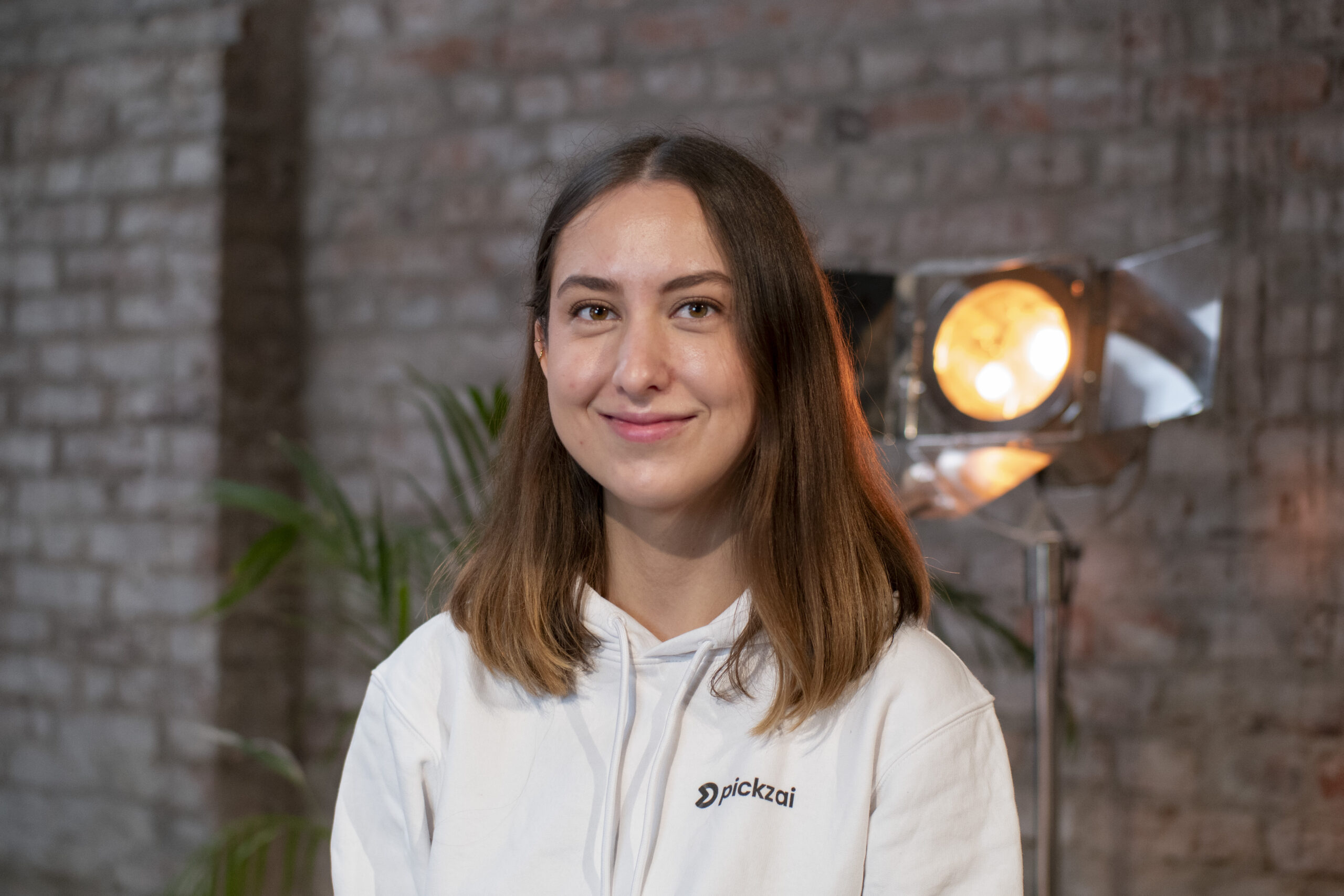
AI Startup Rising has supported us with valuable sparring and helpful impulses throughout the development of pickz ai.
Alexandra Kluge, Co-Founder & COO of pickz ai, IGNITION 2026 #1