

Startup Profile
Cyreen
Introduce yourselves
Tell us in three sentences who you are
Cyreen is a Frankfurt-based scale-up that makes in-store retail media measurable. With our C.A.P. technology (Connecting Ad Impressions with Purchase), we anonymously connect ad exposure on in-store screens with the actual purchase at the checkout. This allows retailers and brands to see, for the first time, which campaign actually generates which sales. We founded Cyreen in March 2017, while we were still completing our Master’s degrees at Rotterdam School of Management.
What challenge does your startup address and how did the idea for it come about?
Online advertising has long been data-driven and measurable, while brick-and-mortar retail completely lacked this level of precision. That was exactly the gap we wanted to close. Herbert Boos brought the original idea with him from his time working in the RFID sector, while Benedict Boos, Davide Scheidegger and Ciril Hofmann joined through their studies together in Rotterdam. In the early days, we travelled from Rotterdam to Frankfurt every week to speak with retail partners and media sales companies.
The biggest challenge was that offline, there is no cookie and no pixel. We had to build our own hardware and data collection infrastructure, from RFID tags on shopping carts to the screens themselves. On top of that, there were stringent data protection requirements in physical spaces and highly diverse IT environments across the retail sector. Our most important lesson was that a rigid solution would not work. Initially, we could only control our own screens; today, C.A.P. is open and agnostic and can be integrated with existing systems, CMS platforms and tracking solutions.
How does Cyreen work and how does AI support this project?
Shopping carts and baskets are equipped with RFID tags. When an intelligent screen detects a cart within its visual and audio range, the ad starts playing and the contact is recorded anonymously. At the checkout, we link this contact to the anonymised receipt. This means we are not working with projections, but with the individual customer journey.
AI comes into play where these data streams are turned into insights. Our Playout AI Engine understands the shopping situation in real time and decides which ad should be played at the right time and in the right place. The basis is always genuine, measured conversion rather than an estimate: we know whether an advertising contact actually resulted in a purchase, and the system learns from this. This enables robust incrementality measurement, pattern recognition across product categories and optimised ad delivery. We developed and scientifically validated this approach, among other things, as part of a research project with EBS University, funded by the LOEWE initiative of the State of Hesse.
Who is behind Cyreen? Give us a brief introduction to your team
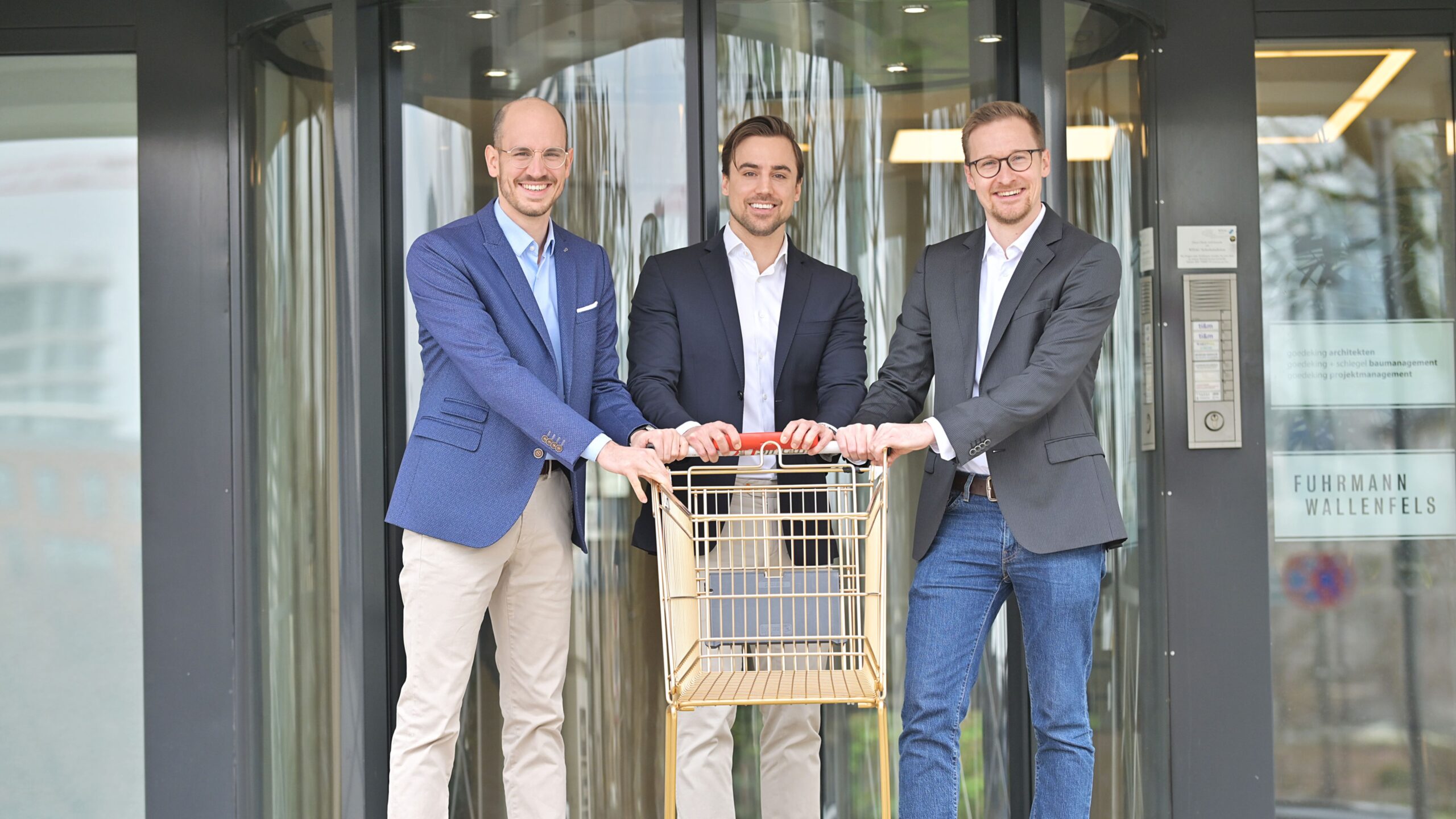
The management team consists of Benedict Boos, Davide Scheidegger and Ciril Hofmann. Herbert Boos is the most senior founding member and contributed the original idea. Werner Schubert is responsible for technological development, while Kirsten Kiel contributes her expertise in retail. They are joined by a team working across data science, software development and marketing, as well as an advisory board of experts from retail, media, AI and academia, including Professor Dennis Herhausen, who has published research on our effectiveness studies.
What benefits does your technology offer customers and retailers?
We address two sides at the same time. For retailers, retail media creates a new, high-margin source of revenue, while also providing valuable first-party data and transparency into behaviour within their own stores. For brands, we solve the problem that in-store campaigns have previously been difficult to evaluate reliably.
The methodology is key: we compare shoppers with and without advertising exposure in the same store at the same time. This eliminates the need for external control stores and makes the results significantly more robust. And we do not just see whether advertising works, but also what drives its effectiveness. Our case studies show, for example, that factors such as sound, frequency, time of day or weather significantly change the measured effect within the analysis group – in other words, among the shoppers who actually saw the ad.
How does your solution change my shopping experience?
You do not have to install anything, scan anything or disclose any data. The system operates 100 percent anonymously and in compliance with the GDPR. What changes is the relevance: an ad plays when you are actually standing in front of it, rather than running endlessly in a loop with no one there to see it. Because we measure which content works, the content improves over time and becomes less arbitrary. Ideally, you receive inspiration exactly where the purchasing decision is already taking place.
What advice would you give to other founders looking to start a business in retail or technology?
Get to know the market properly as quickly as possible. Who are the relevant players, what are their interests, and how are they connected? Attend industry events and speak openly with people there. That will teach you more than any amount of desk research.
Find experts who have known the market for years. They will give you both knowledge and credibility when you approach established players.
Do not expect rapid developments in the retail environment. Decision-making processes are long, so you need patience and persistence.
Let’s take a look into the future: where could the project be in five years?
Our goal is for measurable in-store retail media to become the standard rather than the exception. With RTG Media, Germany’s first measurable, cross-retailer network with more than 800 screens in around 185 stores will be established by April 2026, and more than 100,000 shopping carts in Germany alone have already been made intelligent. In five years, we see ourselves at the Connected Store stage: the entire retail floor will be connected and measurable, combining intelligent shopping carts, handheld scanners and loyalty data with a mix of tracking technologies ranging from GDPR-compliant cameras and sensors to RFID.
How do you respond to your biggest critics?
The most common criticism concerns data protection. We do not respond with arguments, but with transparency: our system operates exclusively with anonymised data, and data protection has been part of the technology from the very beginning rather than being added as an afterthought. The referencing methodology developed for C.A.P., along with its data and consumer protection concept, was recognised by the European Commission in 2021.
The second criticism is that in-store advertising is simply another screen with no real impact. We respond to this with numbers rather than claims. For us, in-store retail media is not a short-term trend, but an empirically validated channel: the technology is backed by more than six years of research, 237 completed campaigns and around 30 million analysed customer journeys, while an independently supported study shows an average 8.1 percent increase in purchase probability. Incidentally, we agree with the criticism regarding the lack of measurability. That is exactly why Cyreen exists.
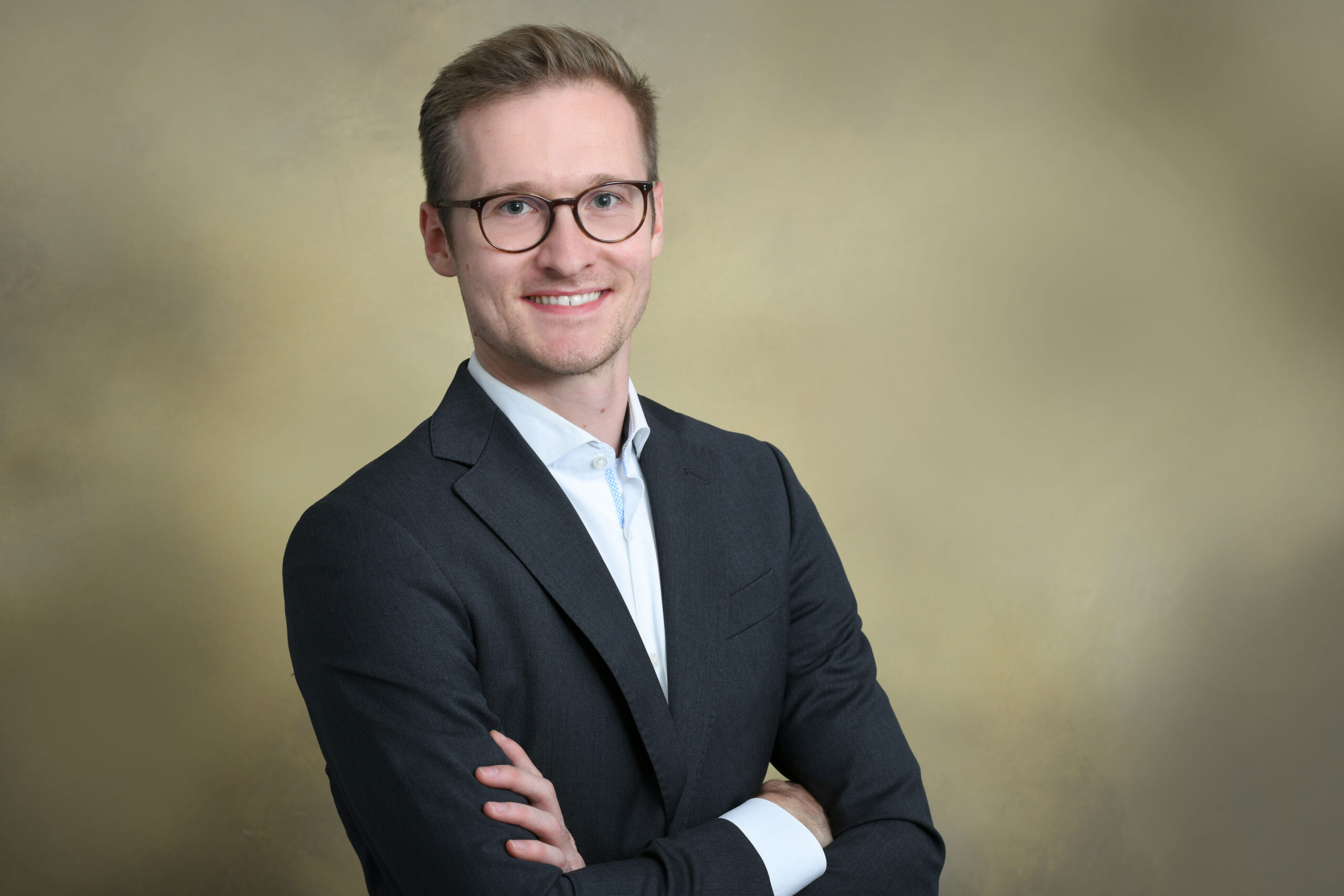
AI Startup Rising supported our journey through mentoring, workshops and exchanges with experienced founders, providing us with valuable professional and strategic input for the further development of our project.
Benedict Boos, Co-founder Cyreen, Accelerator Rising 2023