

Startup Profile
Ceres FieldCheck
Introduce yourselves
Explain in three sentences what Ceres FieldCheck is! How long has Ceres FieldCheck been around?
Ceres FieldCheck develops AI swarm robots to help small farmers in developing countries maximize crop yields. Our robots use AI-driven crop health inspection and proprietary weed-removal technology to prevent harvest losses while reducing the need for chemical inputs. We formed as a team in November 2023 and have been building Ceres FieldCheck full-time since early 2026, with the goal of improving food security and farmer livelihoods by keeping the world’s fields healthy.
How did the idea come about?
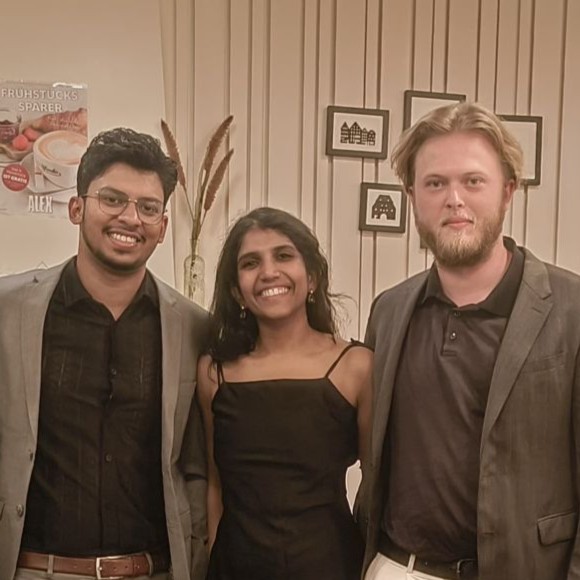
Poojitha (our CEO) grew up in a farming family in Nellore, India, and saw firsthand how her father and other small farmers struggled with crop losses caused by weeds and diseases they couldn’t afford to fight. She studied robotics at RWTH Aachen to build a solution herself. Along the way, she met her co-founders at RWTH Aachen, FSEC (Co-founder Wanted event) and IIT Kanpur, and Ceres FieldCheck was born.
How do the CeresField Check robots work, and what technologies do you use to enable chemical-free weed control and early detection of plant diseases?
We developed our core functionality based on farmer surveys and interviews, identifying three key features: affordability, user-friendliness and adaptability to various crops. The result is our compact AI robot, Luke, which eliminates the need for harmful herbicides and reduces pesticide use by at least 30%. Luke is fully autonomous, navigating fields using visual SLAM. As it drives, a proprietary wheel-integrated mechanism removes weeds by the root and buries them back as eco-fertilizer, while onboard AI models trained on over 125,000 field images inspect crop health in real time, catching disease with 98.7% accuracy. Swarm coordination between multiple Lukes is on our roadmap, built to let entire farming communities scale shared access as demand grows.
How far along is your prototype right now, and what challenges did you have to overcome during development?
We’re on our third-generation prototype, at TRL 6. Our first two-wheel-drive design was unstable, so we rebuilt the chassis lighter and smaller, widened the wheels, and added passive stabilisation. TRL 7 is next, targeted for January 2027. Getting suppliers to deliver machined parts on time was our biggest challenge, and it’s one we still face. We’ve found suppliers in both India and Germany who deliver roughly within acceptable deadlines, and we now build a two-week buffer into our execution timeline, using that time to advance other workstreams.
Where do you want to be in five years?
We estimate that our robots can reach at least 150,000 smallholder farmers in South India and Ethiopia, with plans to expand across Africa and South Asia. By working with NGOs, farmer cooperatives, and government organizations, we can make our technology accessible even to the smallest farmers. Our goal is to become the first agricultural robotics company to reach the world’s most underserved farmers, helping them move out of poverty and reducing farmer suicide rates.
What is your biggest point of discussion within the team?
Manufacturing and service logistics. Building a robot is one problem; keeping it running for a farmer hundreds of kilometres from any of our founders is another. We constantly debate how much of the supply chain to build ourselves versus rely on local partners, where to place spare parts and repair capacity so a breakdown doesn’t cost a farmer an entire season, and how to get machined components on time when our suppliers span India and Germany. It’s the least glamorous part of what we do, and probably the most important.
How do you respond to your biggest critics?
We run on a “criticize as much as you can” policy internally. We genuinely want the harshest feedback we can get because it forces us to look deeper, question our assumptions, and come up with better, more innovative solutions. For example, one of the most common criticisms we hear is that robots are the wrong tool for fragmented smallholder farms because no single farmer can justify owning one. We agree; which is why farmers don’t own Luke. Through NGO and cooperative-based rental models, multiple small farms can share one robot, keeping it in near-constant use across roughly 40 farmers.
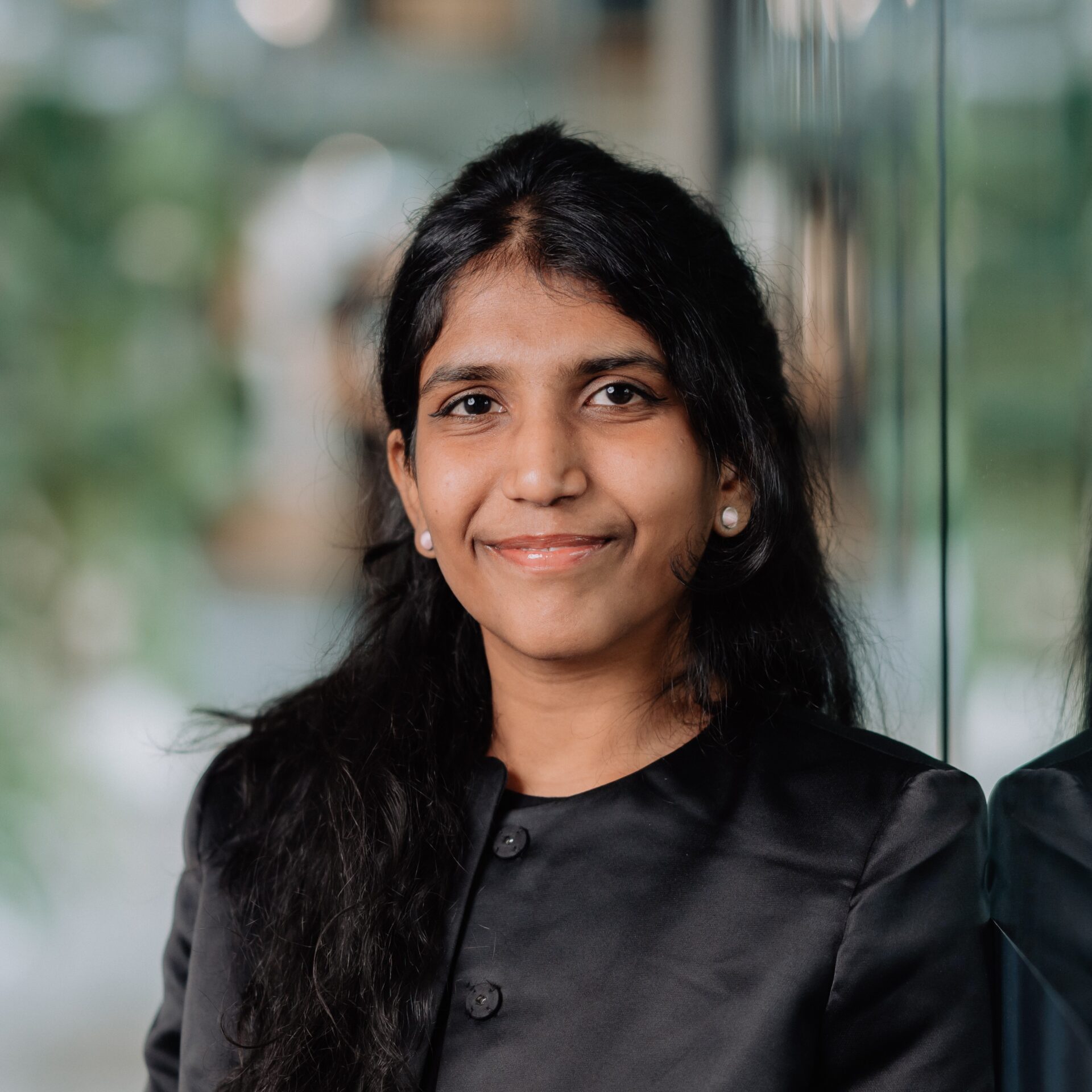
We don’t even know where to begin expressing our gratitude for the support we’ve received from Hessian.AI. We met one of the Hessian.AI coaches, Phillip Travers, at our very first pitch: the day it all began. We still see it as a lucky coincidence, or what we sometimes call the “butterfly effect” internally. Phillip encouraged us to apply to AISC, and we were literally just an idea when we applied. Hessian.AI nurtured us through the AISC journey, helping us reach the finals and secure our first financing within our first three months. LAISF gave us the confidence and the push to design and build our first prototype and validate our AI models. The progress we made through LAISF also helped us secure follow-up grants from EIT, GIZ, RWTH SEP, EXIST, and others. Without LAISF and the people who believed in us from the beginning, we simply wouldn’t be the startup we are today. Calling Hessian.AI and Phillip our “guardian angels” would honestly be an understatement.
Poojitha Nellipudi, Co-Founder